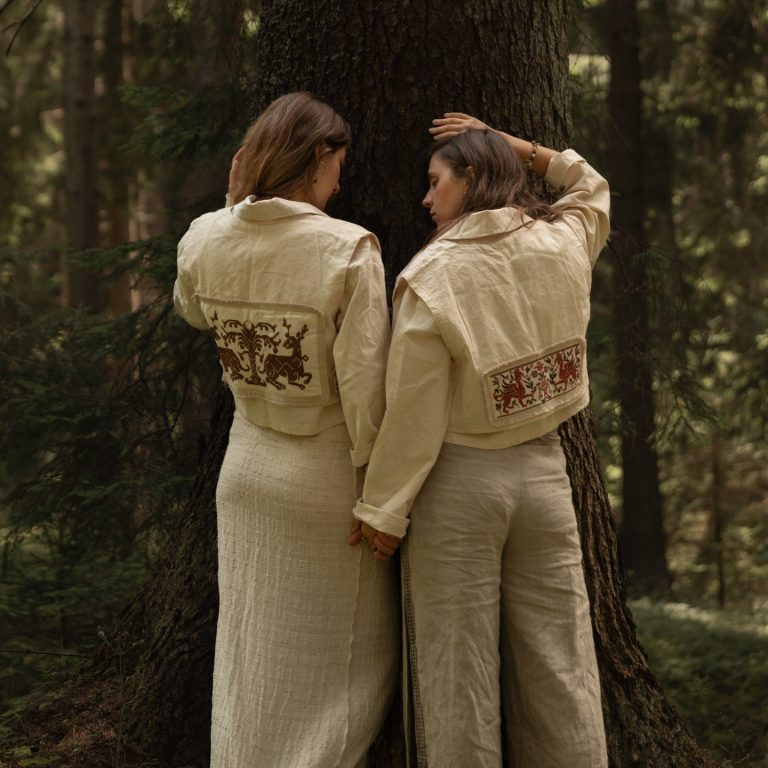
Az eco printelt len ruháim nem csupán az erdőben lettek lefényképezve – visszatértek oda, ahonnan származnak. A levelek lenyomatai, a növényi festékek árnyalatai, a textil rostjaiban megülő emlékezet mind ismerősként találkozott a fákkal, a mohával, a föld illatával. Mintha a ruha és a táj már korábban is ismerték volna egymást.
Ebben a találkozásban az ember nem uralja a természetet, hanem beleolvad. A ruha itt nem dísz, nem elválasztó réteg, hanem második bőr: véd, lélegzik, reagál. Követi a test mozgását, együtt él a széllel, a fény változásával, a levelek susogásával. A len hűvössége és természetes textúrája összeköti a viselőt a környezetével, finoman emlékeztetve arra, hogy a test is a természet része.
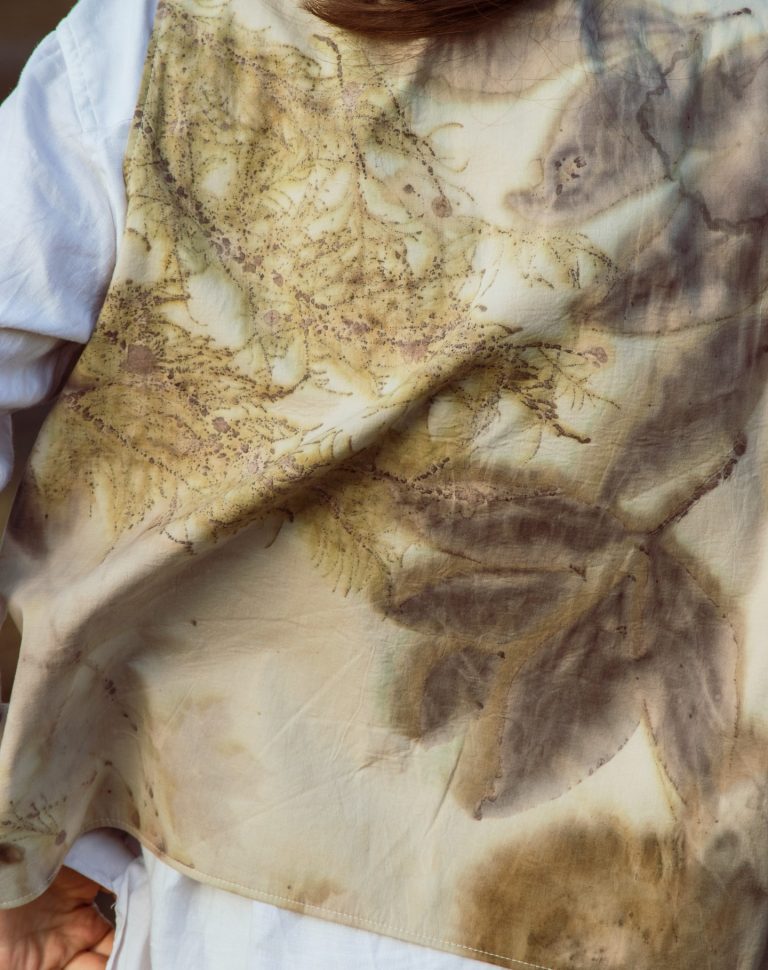
Ahogy a ruhák beleolvadtak az erdő ritmusába, megszűnt a határ ember és környezete között. A növényi minták nem kívülről kerültek rá az anyagra – a természet önmagát írta bele. A ruha így válik hordozható tájjá, egy csendes párbeszéddé ember és világ között.
Ez a pillanat nem a látványról szólt, hanem a jelenlétről. Arról az ősi tapasztalásról, amikor az öltözék nem elrejt, hanem összekapcsol. Amikor a ruha funkciója túlmutat az esztétikán: emlékeztet arra, kik vagyunk, és honnan jövünk.
The eco-printed linen dresses were not simply photographed in the forest — they returned to where they came from. The imprints of leaves, the tones of plant-based dyes, and the memory held within the fibers of the textile met the trees, the moss, and the scent of the soil as something deeply familiar. It felt as if the garments and the landscape had known each other long before this moment.
In this encounter, the human presence does not dominate nature, but melts into it. The garment is not an ornament or a barrier; it becomes a second skin — protective, breathable, responsive. It follows the movement of the body, lives with the wind, the shifting light, and the quiet rustle of leaves. The natural coolness and texture of linen reconnect the wearer to the environment, gently reminding us that the body itself is part of nature.
As the dresses blended into the rhythm of the forest, the boundary between human and surroundings dissolved. The botanical patterns were not applied from the outside — nature inscribed itself into the fabric. In this way, the garment becomes a portable landscape, a silent dialogue between the human body and the living world.
This moment was not about spectacle, but about presence. About an ancient understanding in which clothing does not conceal, but connects. Where the function of a garment reaches beyond aesthetics and becomes a reminder of who we are and where we come from.